Shop by Category:

Wait — before you go!
Get 10% OFF your first order at Motor Headz.
Professional car care products, delivered across India.
Shop by Category:

Get 10% OFF your first order at Motor Headz.
Professional car care products, delivered across India.
🚚 Free Ship ₹999+ | SHINE10 = 10% Off
✅ Premium Car Care • 💳 COD Available • 🔄 Easy Returns • 📞 24/7 Support
🚚 Free Ship ₹999+ | SHINE10 = 10% Off
✅ Premium Car Care • 💳 COD Available • 🔄 Easy Returns • 📞 24/7 Support
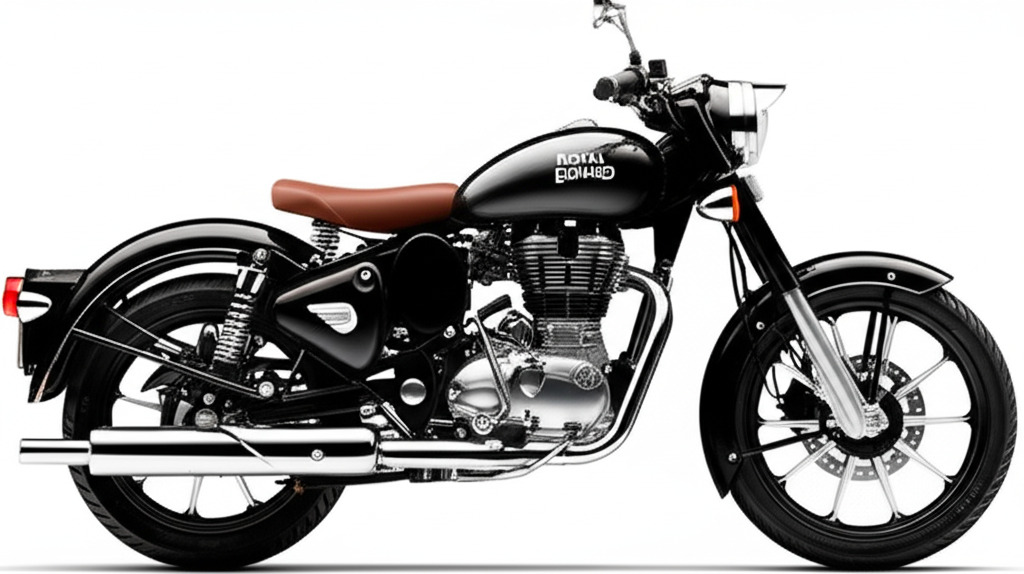

Complete bike coating price guide for India in 2026. Compare ceramic vs graphene coating costs for motorcycles, DIY vs professional pricing by bike segment, and find out which coating works best for Indian riding conditions.
You spent weeks researching your motorcycle. Compared specs, watched every YouTube review, negotiated hard at the dealership. Then you rode it home and parked it under a tree. No coating. No protection. Just bare paint against India’s sun, monsoon rains, and pothole-riddled roads.
Here’s the thing most riders don’t think about: your motorcycle takes far more punishment than any car. There’s no garage-like cabin shielding the bodywork. Every panel sits exposed to direct UV, road spray, chain lube mist, and exhaust heat. India crossed 20 million two-wheeler sales in 2025, yet barely a fraction of those bikes get any paint protection. ([Autocar India](https://www.autocarindia.com/bike-news/two-wheeler-sales-cross-20-million-mark-in-438709))
That’s a lot of unprotected paint slowly fading in the sun.
This guide breaks down exactly what bike coating costs in India right now, compares ceramic and graphene options head-to-head, and helps you pick the right protection for your ride and budget.
TL;DR: Bike ceramic coating costs ₹2,000-12,000 depending on DIY vs professional application. Graphene coating runs ₹3,000-18,000 but handles engine heat and UV better. For most Indian riders on commuters or mid-segment bikes, a quality DIY ceramic kit (₹2,000-4,000) offers the best value. Sport and superbike owners should consider professional graphene coating for long-term protection.
—
India’s two-wheeler market generated USD 28.84 billion in revenue in 2025, making it the largest motorcycle market on the planet by volume. ([Mordor Intelligence](https://www.mordorintelligence.com/industry-reports/india-two-wheeler-market)) Yet aftermarket paint protection for bikes remains an afterthought for most owners. Your motorcycle faces a unique set of threats that cars simply don’t.
Direct surface exposure. There’s no roof, no doors, no window glass acting as a buffer. UV radiation hits the tank, fenders, and fairings at full intensity. During Indian summers, surface temperatures on a dark-coloured tank can exceed 70°C.
Engine heat radiation. This is the big one. Your engine sits inches from painted panels and chrome surfaces. Thermal cycling — heating up during rides, cooling down when parked — stresses paint and clear coat over time. Exhaust pipes radiate heat directly onto lower fairings.
Chain lube and road spray. Every chain lube application flings a fine oil mist onto the swingarm, rear fender, and lower bodywork. Add the road grime, tar, and gravel kicked up by your front tyre, and you’ve got constant abrasion.
More frequent washing. Bikes get dirtier faster, so most riders wash weekly. Each wash with harsh detergents from the local bike wash strips away clear coat. Over two or three years, the paint looks noticeably duller.
A coating creates a sacrificial barrier between these threats and your actual paint. That’s protection wax alone can’t provide.
—
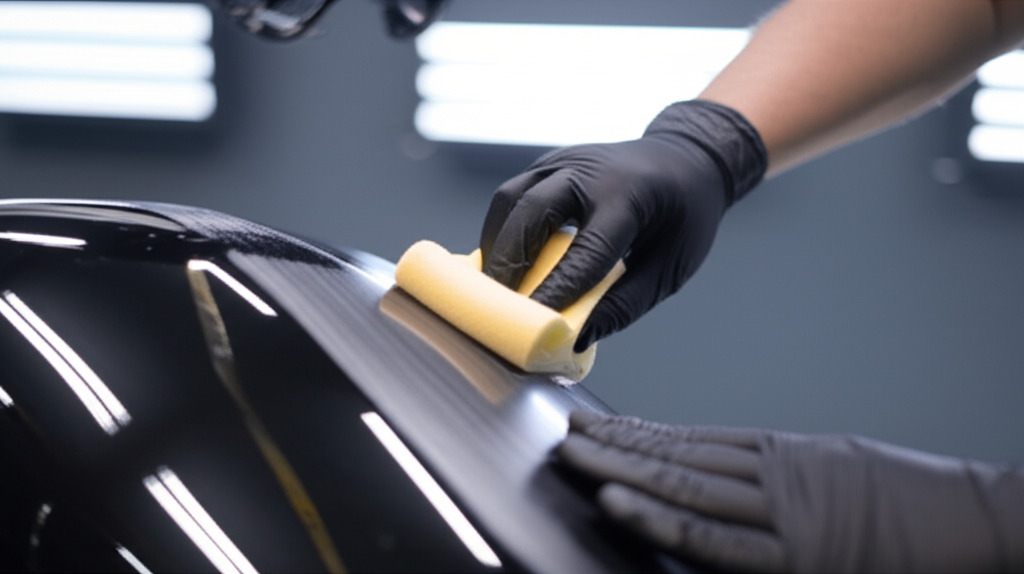
Professional bike ceramic coating in India starts at around ₹5,000 and can go up to ₹18,000 for premium graphene treatments, based on current market rates as of early 2026. ([The Detailing Gang](https://thedetailinggang.com/blog/best-ceramic-coating-for-bikes-top-brands-and-updated-price-2024)) DIY kits bring costs down significantly because motorcycles have far less surface area than cars.
Here’s what you’ll actually pay right now:
| Coating Type | DIY Kit Price | Professional Price | Durability |
|—|—|—|—|
| Ceramic (9H) | ₹2,000 – ₹4,000 | ₹5,000 – ₹12,000 | 1-3 years |
| Graphene | ₹3,000 – ₹5,000 | ₹8,000 – ₹18,000 | 3-5 years |
| Ceramic Spray | ₹500 – ₹1,500 | Not typically offered | 3-6 months |
| Teflon/PTFE | ₹800 – ₹1,500 | ₹2,000 – ₹4,000 | 3-6 months |
Why such a wide range? Three factors drive it:
Brand of coating. A 3M ceramic coating for bikes starts at ₹3,000-7,000 professionally. Imported brands like Gtechniq or IGL push toward ₹15,000+.
City and studio reputation. A studio in South Delhi or Indiranagar, Bangalore, charges 30-50% more than a detailer in a Tier 2 city.
Bike size and complexity. A Honda Activa has roughly half the paintable surface of a fully faired Yamaha R15 or a chrome-laden Royal Enfield Classic 350. Panel count directly affects labour and product use.
Information Gain: A motorcycle uses roughly 30-50% less coating product than a sedan, which is why DIY bike coating is significantly cheaper than car coating. One 30ml bottle that covers half a car can easily do an entire motorcycle with product to spare.
—
For motorcycles specifically, graphene coating outperforms traditional ceramic in heat management — and that matters more on bikes than on any other vehicle. Graphene’s thermal conductivity of approximately 5,300 W/mK allows it to dissipate heat far more efficiently than ceramic coatings. ([IGL Coatings](https://blog.iglcoatings.com/7-key-ceramic-coating-vs-graphene-ceramic-coating/))
But that doesn’t mean ceramic is a bad choice. Let’s compare what actually matters for riders.
Your engine block, exhaust headers, and pipes radiate serious heat onto nearby painted surfaces. Graphene’s heat dissipation means the coating doesn’t break down as quickly in high-temperature zones. Ceramic is more prone to thermal stress near exhaust areas.
Winner for bikes: Graphene.
Both coatings block UV effectively, but graphene holds a slight edge for long-term UV stability. If you park outdoors daily — as most Indian riders do — this difference compounds over years.
Winner: Graphene (slightly).
Ceramic provides excellent hydrophobic properties out of the box. Graphene offers similar water beading but adds anti-static properties, meaning dust doesn’t cling as aggressively. For a bike that lives outdoors, that’s a real benefit.
Winner: Graphene for dust resistance. Ceramic for immediate water beading.
Here’s where ceramic fights back. A ₹3,000 DIY ceramic kit gives 1-3 years of protection. A graphene kit at ₹4,000-5,000 gives 3-5 years. Per-year cost is roughly equal. But upfront professional graphene (₹8,000-18,000) is notably higher than ceramic (₹5,000-12,000).
Winner: Ceramic for budget-conscious riders. Graphene for longer protection cycles.
If you own a sport bike or superbike where engine heat is a real concern and you want maximum longevity, graphene is the better investment. If you ride a commuter and want affordable protection that works, ceramic does the job well at a lower price. Don’t overthink it — both are significantly better than bare paint.
—
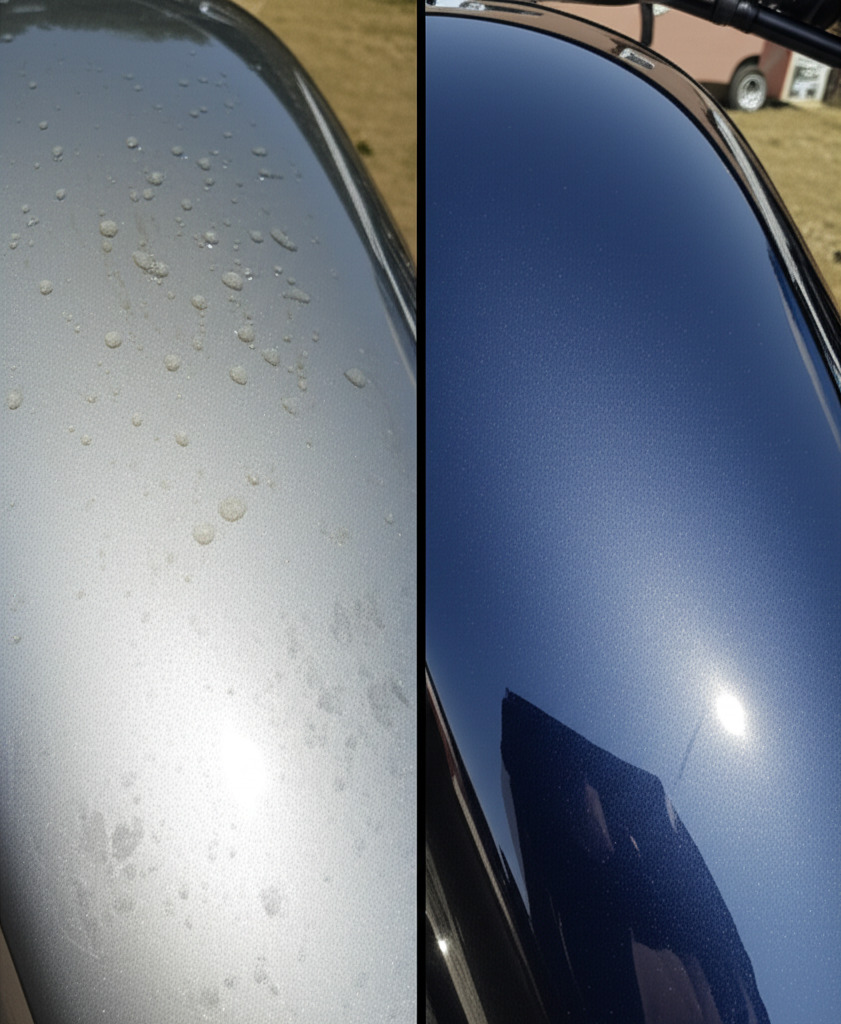
Royal Enfield alone sold over 10.7 lakh motorcycles in India in 2025, a 25% jump over the previous year. ([Autocar India](https://www.autocarindia.com/bike-news/royal-enfield-sales-in-india-surpass-1-million-units-in-438878)) That’s a lot of Classic 350s, Hunters, and Meteors riding around without any paint protection. Here’s what coating costs based on your bike segment.
Bikes: Honda Shine, TVS Apache RTR 160, Bajaj Pulsar 150, Hero Splendor, Yamaha FZ-S
These bikes have minimal bodywork and smaller tanks. A professional ceramic job takes 3-4 hours. Most commuter owners should consider DIY — you can coat the entire bike in under two hours for ₹2,000-3,500.
Is spending ₹5,000+ on coating a ₹1.2 lakh bike worth it? If you plan to ride it for 3+ years, yes. A coated Pulsar will look visibly better than an uncoated one after two monsoon seasons.
Bikes: KTM Duke 390, Yamaha R15 V4, TVS Apache RR 310, KTM RC 390, Bajaj Dominar
Full fairings mean more surface area and complex panel shapes. The curves on an R15 or the aggressive lines on a Duke require careful application. Professional coating makes more sense here — high spots or streaks are highly visible on sport bike fairings.
Engine heat is a bigger factor on performance machines. A graphene coating in the ₹8,000-12,000 range provides the best protection for this segment.
Bikes: Royal Enfield Classic 350/650, Triumph Speed 400, Kawasaki Ninja 650, BMW G 310, Harley-Davidson X440
Premium bikes deserve premium protection. A Royal Enfield Classic with chrome elements benefits enormously from coating — chrome is especially vulnerable to oxidation during monsoon. Superbikes with special finishes (matte, metallic, pearl) should always get professional application.
Information Gain: Chrome surfaces on motorcycles like the Royal Enfield Classic 350 oxidize 2-3x faster in coastal Indian cities (Mumbai, Chennai, Kochi) due to salt air exposure. Coating chrome is just as important as coating painted panels.
—
Coating a motorcycle yourself is genuinely easier than coating a car. Less surface area means less product, less time, and fewer mistakes. A full DIY bike coating takes 2-3 hours versus 6-8 hours for a car.
Step 1: Wash thoroughly. Use a pH-neutral shampoo — not roadside bike wash detergent. Rinse completely and let the bike dry fully.
Step 2: Clay bar the surfaces. Run a clay bar over all painted panels and chrome. This is non-negotiable — coating over contaminated paint is a waste of money.
Step 3: IPA wipe-down. Spray IPA solution (50:50 with distilled water) on each panel and wipe clean. The surface must be bare for the coating to bond.
Step 4: Apply the coating. Work one panel at a time. Apply 4-5 drops to the applicator pad, spread in cross-hatch pattern. Wait 1-3 minutes until you see a rainbow flash, then buff off with a clean microfiber.
Step 5: Cure time. Keep the bike dry and sheltered for 24 hours. No riding in rain. No washing.
Pro tip: Start with the least visible panel (underseat cover or rear fender) to get your technique down before moving to the tank.
—
Even experienced car detailers trip up when coating bikes. Motorcycles have unique geometry and heat challenges. Avoid these errors.
The fuel tank is covered in compound curves. Product tends to pool in depressions between knee cutouts and near the filler cap recess. Apply thinner layers on curved surfaces and check for pooling from multiple angles before buffing.
Applying standard ceramic coating within 5-10cm of exhaust headers is pointless — heat degrades the coating rapidly. Use a dedicated high-temperature coating for exhaust areas or simply mask them off. Many professional detailers won’t coat exhaust components for this reason.
Don’t coat the chain spray zone — behind the front sprocket and along the swingarm where chain lube gets flung. Coating here traps grime more stubbornly. Instead, apply a sacrificial layer of spray wax that’s easy to strip and reapply.
Coating that dries on rubber or textured plastic is extremely difficult to remove. Motorcycles have grommets and trim pieces everywhere. Spend ten minutes with masking tape before you start.
—
A quality ceramic coating lasts 1-3 years on a motorcycle in Indian conditions. Lifespan depends on whether the bike is garaged or parked outdoors, wash frequency, and your city’s climate. Coastal cities like Mumbai or Chennai shorten lifespan due to salt exposure. Maintenance with a ceramic booster spray every 3-4 months extends the coating’s life.
Yes — especially as a DIY application. A ₹2,000-3,000 DIY ceramic kit protects your paint for 1-2 years and makes weekly washing faster. You don’t need professional coating for a commuter. The DIY approach gives 80% of the protection at 30% of the cost. Think of it as an insurance policy for your paint.
Standard automotive ceramic coatings aren’t designed for exhaust temperatures, which reach 300-600°C on motorcycle headers. You’ll need a specialised high-temperature coating for exhaust applications, or a dedicated exhaust wrap. Don’t waste regular coating on pipes — it’ll burn off within weeks. Keep standard coatings on painted and chrome surfaces only.
Professional graphene coating for a Royal Enfield Classic 350 or Meteor 350 costs ₹8,000-15,000, depending on city and studio. Chrome elements add complexity and time. DIY graphene kits run ₹3,000-5,000 and work well on Enfields, though chrome tank halves require extra care to avoid streaking.
Coat it as soon as possible — ideally within the first month of ownership. New paint bonds most effectively with coatings. Waiting means the paint accumulates swirl marks, minor scratches, and UV damage that you’ll need to correct before coating. A new bike means you skip paint correction entirely, saving time and money.
—
India’s two-wheeler market is projected to reach over 100 million units annually by 2034. ([IMARC Group](https://www.imarcgroup.com/india-two-wheeler-market)) The vast majority of those motorcycles will face Indian roads, sun, and monsoon without a single layer of protection.
Don’t let yours be one of them.
If you ride a commuter or mid-segment bike, grab a quality DIY ceramic coating kit for ₹2,000-4,000 and do it yourself this weekend. Two hours of work saves ₹5,000+ over professional application. Motorcycles are genuinely accessible for first-time DIY coaters.
If you own a premium bike or superbike with specialty paint, go professional. The ₹10,000-18,000 for graphene coating is a fraction of your bike’s value and protects it for 3-5 years through India’s harshest weather.
Either way, do it before monsoon hits. Coatings need 24 hours of dry cure time, and once the rains start, finding a dry window becomes a gamble.
—
Motor Headz is bringing dedicated bike coating kits to India soon. Formulated for the unique challenges of motorcycle surfaces — engine heat zones, chrome compatibility, and smaller panel sizes.
Want early access and launch pricing?
[Sign up for “Bike Coating Coming Soon” notifications →](#bike-coating-signup)
Be the first to know when we launch. No spam — just one email when it’s ready.
—
Sources referenced in this article: